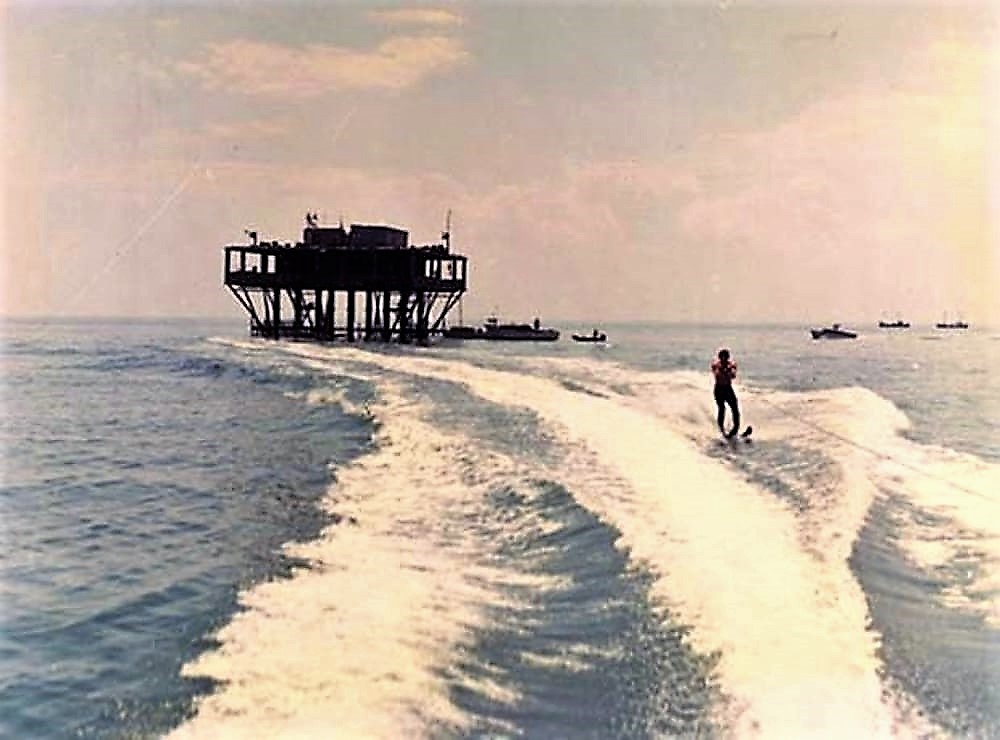
In the 1968, Italian engineer Giorgio Rosa built a 400-square-meter platform on nine steel pylons in the Adriatic Sea, just beyond Italy’s territorial waters off Rimini. On 1 May 1968 he proclaimed it an independent state: the Republic of Rose Island (in Esperanto, Respubliko de la Insulo de la Rozoj). The platform sat roughly 11–12 km offshore and was conceived as equal parts engineering experiment and political provocation.
Life on the Platform
Rose Island was more than a bare structure. It hosted a bar, restaurant, nightclub, souvenir shop, and even a post office. Esperanto was chosen as the official language, and the micronation printed its own stamps to symbolize independence. Tourists visited the platform, intrigued by its novelty and the idea of living beyond national borders.
Government Response
Italian authorities quickly grew concerned that Rose Island was less a utopian experiment and more a way to avoid taxes and regulations. On June 25, 1968, police and naval forces occupied the platform, preventing further access and ending Rosa’s vision of sovereignty.
Demolition and Legacy
In February 1969, the Italian Navy demolished Rose Island with explosives, and winter storms swept away the remains. Though it lasted less than a year, Rose Island left behind a story that has continued to spark curiosity. Its brief existence is often cited as an example of human creativity, defiance, and the blurred line between innovation and rebellion.

Its story has since inspired documentaries, articles, and a 2020 feature film, keeping alive the question that powered Rosa’s platform: where do the boundaries of statehood really begin?