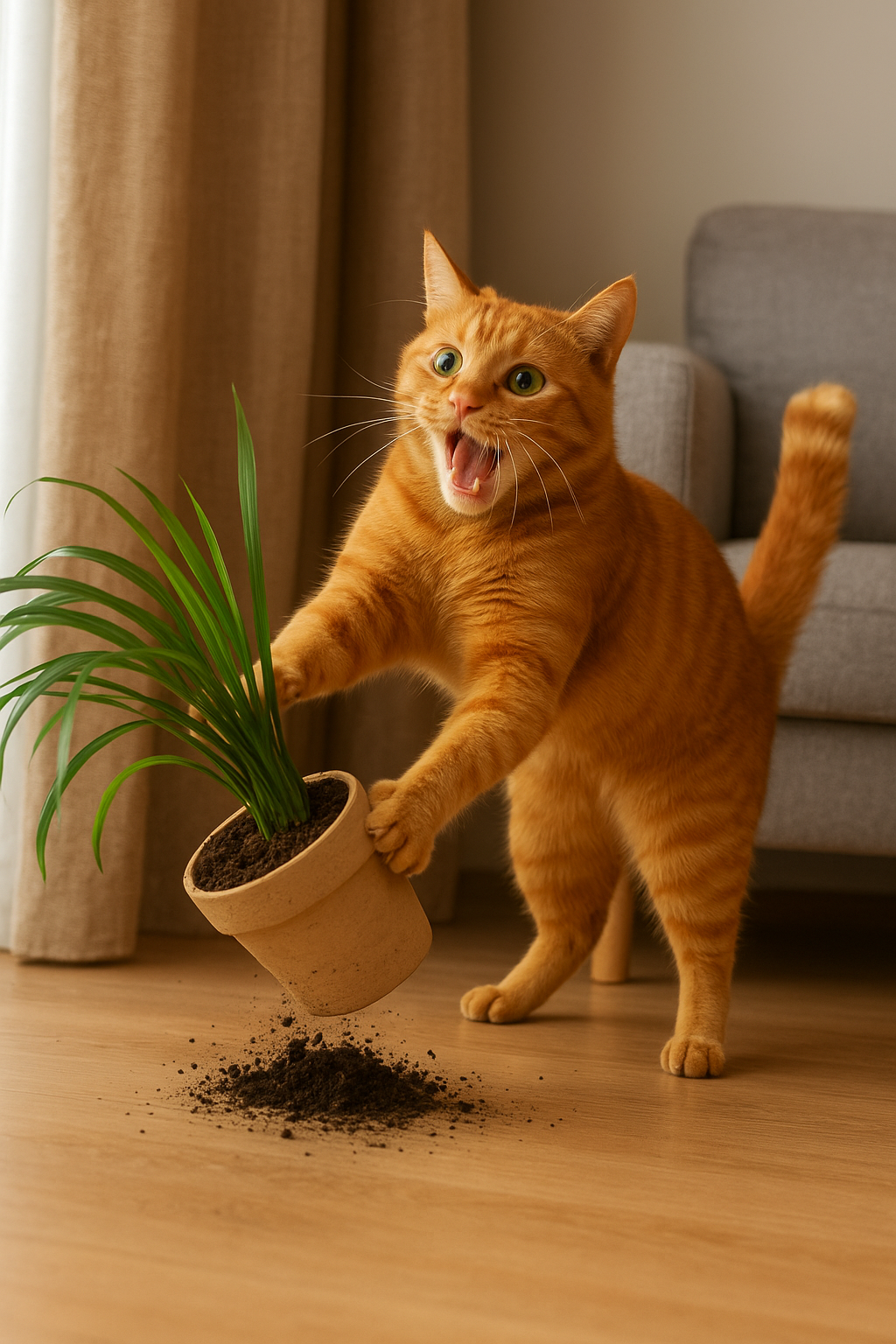
There’s a special kind of energy that radiates from an orange cat. Whether you call them “ginger,” “marmalade,” or just “that little menace,” orange cats have earned a reputation as the lovable clowns of the feline world. From internet memes to personal anecdotes, stories abound of their bizarre behavior — but is there any truth behind the legend of the “crazy orange cat,” or is it just collective internet mythology?
A Reputation Born Online
The myth of the unhinged orange cat was largely cemented in the digital age. Memes and viral videos showcased cats named Garfield, Cheeto, and Tang losing their minds over invisible enemies, sprinting down hallways at 3 a.m., or attempting to eat things clearly not meant for consumption.
On TikTok, entire hashtags (#orangeCatBehavior, #chaosGremlin) are dedicated to documenting their antics. The archetype emerged: orange cats are loud, affectionate, slightly stupid, and wholly endearing.
But beneath the laughter lies a real question — are orange cats actually more prone to wild behavior?
Genetics and Personality: A Fiery Mix
Coat color in cats is linked to genetics on the X chromosome. Because orange coloring is tied to this gene, male cats (with only one X chromosome) are far more likely to be orange — roughly 80% of orange cats are male. This matters because male cats, especially unneutered ones, often exhibit more dominant or territorial behaviors.
Combine that with the social, confident tendencies observed in many male cats, and you get a recipe for mischief. It’s not that orange cats are genetically “crazy” — it’s that their biological and behavioral factors overlap in ways that make them stand out.
The Science (Sort Of) Behind the Chaos
While there’s no peer-reviewed paper titled “Why Orange Cats Are Agents of Chaos,” several studies hint at personality links with coat color. Research from the University of California, Davis, found that cat owners often perceive orange cats as more affectionate and friendly — but also more “clownish” and demanding of attention.
Anecdotally, vets and shelters report similar trends. Orange cats tend to be more social, more confident, and less fearful of humans. That makes them more likely to engage — or interfere — with your daily life.
In short: orange cats don’t follow the rules. They think you should follow them.
From Garfield to Crookshanks: Pop Culture’s Orange Icons
It’s no coincidence that so many famous fictional cats are orange. Garfield’s laziness, Crookshanks’ intelligence, and Milo’s adventurous spirit all reflect the archetype of the orange cat — bold, a little troublesome, and impossible to ignore.
Even in animation, orange cats are often cast as personalities too large for their bodies: street-smart, vocal, curious, and sometimes oblivious. The color itself seems to imply warmth, chaos, and charisma.
Why We Love Their Madness
At the end of the day, orange cats capture something deeply human — the joy of unpredictability. Their wild energy contrasts perfectly with the aloof stereotype of the “mysterious” cat. They don’t brood; they bother. They don’t watch you silently from across the room; they climb onto your keyboard mid-email.
They’re emotional support disasters, lovable gremlins, and furred comedians all at once.
And maybe that’s why they’ve become internet royalty. In a world full of carefully curated content, an orange cat knocking over your coffee cup or trying to fit into a salad bowl is refreshingly real.
The Takeaway
Science may never fully explain the orange cat phenomenon, but one thing’s certain: they have an uncanny ability to turn ordinary moments into miniature dramas. Whether they’re stealing food, chirping at birds through the window, or staring at nothing like they’ve seen a ghost, orange cats remind us that chaos can be charming.

Maybe they’re not crazy. Maybe they’re just living their truth — unapologetically, enthusiastically, and very, very orange.
We miss you Oscar. 🧡