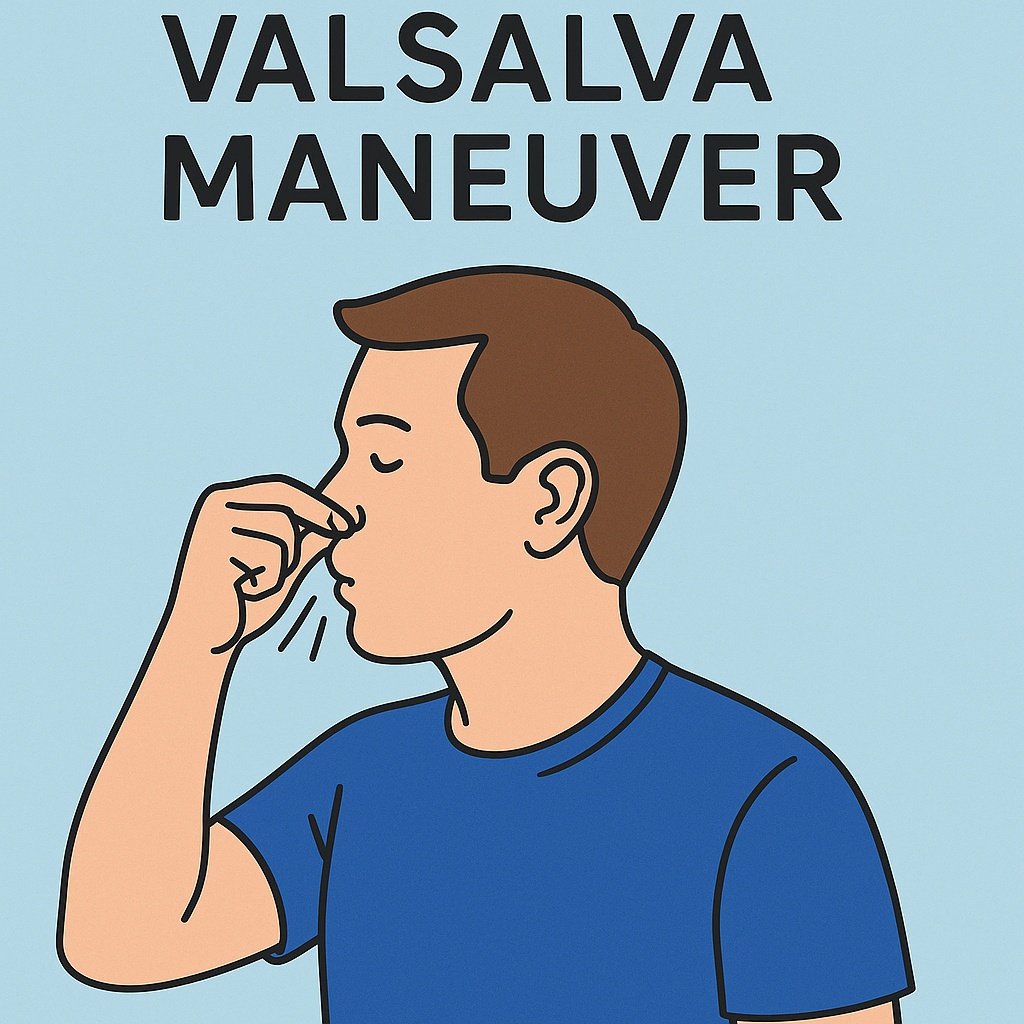
The human body has fascinating ways of adjusting to stress, pressure, and internal changes. One of the most well-known techniques used both intentionally and unintentionally is the Valsalva maneuver. This simple act—forcefully exhaling against a closed airway—has important roles in medicine, fitness, aviation, and everyday life. Though often performed without thinking, the maneuver produces profound effects on the heart, lungs, and circulatory system.
What Is the Valsalva Maneuver?
The Valsalva maneuver is performed by taking a deep breath, closing the mouth, pinching the nose, and trying to exhale forcefully. Because the airway is closed, air cannot leave the lungs, which leads to increased pressure inside the chest cavity. This change in intrathoracic pressure directly impacts blood return to the heart and blood flow throughout the body.
Named after Antonio Maria Valsalva, a 17th-century Italian physician and anatomist, the maneuver was originally studied in relation to the ear and Eustachian tube. Today, its applications extend far beyond its origins, making it a valuable tool in both medicine and daily activities.
Physiological Phases of the Maneuver
The effects of the Valsalva maneuver are usually described in four phases:
- Initial Pressure Rise – As the chest cavity pressure increases, the aorta and arteries experience a brief rise in blood pressure.
- Reduced Venous Return – Sustained pressure decreases blood returning to the heart, leading to a temporary drop in stroke volume and blood pressure.
- Pressure Release – When the person stops straining and opens the airway, intrathoracic pressure falls suddenly, allowing venous return to resume.
- Blood Pressure Overshoot – The heart responds to the restored blood flow with a temporary overshoot in blood pressure, followed by normalization.
These phases are crucial in understanding how the maneuver is used in clinical testing and why it must be performed cautiously.
Medical Applications
Doctors often employ the Valsalva maneuver in diagnostic and therapeutic settings:
- Cardiac Testing – It helps reveal abnormal heart rhythms, autonomic nervous system function, and heart murmurs.
- Treating Supraventricular Tachycardia (SVT) – The maneuver can sometimes reset an abnormally fast heartbeat by stimulating the vagus nerve, which slows heart rate.
- Ear Pressure Equalization – Divers, pilots, and individuals with ear blockages often use it to equalize middle ear pressure during altitude or depth changes.
- Neurological Assessment – It may be used in testing for conditions such as autonomic dysfunction.
Everyday Situations
Most people perform the Valsalva maneuver without realizing it. Examples include:
- Straining during bowel movements
- Heavy lifting or intense exercise
- Blowing the nose forcefully
- Coughing or sneezing
In these cases, the maneuver is either a natural reflex or an unintentional response to pressure.
Risks and Precautions
While the Valsalva maneuver has useful applications, it is not without risks:
- Fainting (Syncope) – The temporary reduction in blood return can cause dizziness or loss of consciousness.
- Blood Pressure Fluctuations – For people with heart disease or hypertension, the sudden pressure changes may be dangerous.
- Stroke or Aneurysm Concerns – In rare cases, excessive straining could contribute to vascular complications.
- Exercise Risk – Weightlifters are often advised to breathe steadily rather than hold their breath excessively to reduce cardiovascular strain.
For most healthy individuals, brief and mild attempts are safe. However, patients with cardiovascular or neurological conditions should consult medical professionals before using it intentionally.

The Valsalva maneuver is a remarkable example of how a simple breathing technique can influence complex physiological systems. From helping pilots and divers equalize ear pressure to serving as a medical tool in cardiac testing, it demonstrates the intricate connections between breathing, circulation, and neurological control. While useful in many contexts, it should be approached with care due to its effects on blood pressure and heart function.
Understanding the maneuver not only deepens appreciation for the body’s adaptability but also highlights the importance of cautious application in medical and daily life.