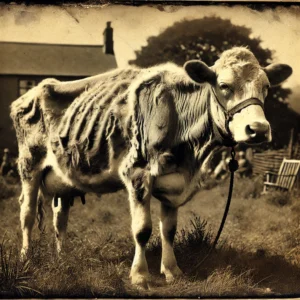
The Mad Cow Disease scandal, officially known as Bovine Spongiform Encephalopathy (BSE), remains one of the most significant public health crises in modern British history. Beginning in the 1980s, this scandal not only devastated the UK’s cattle industry but also raised serious questions about government transparency, food safety, and the ethics of industrial farming.
Understanding BSE and Its Origins
Bovine Spongiform Encephalopathy (BSE) is a neurodegenerative disease in cattle that affects the brain and spinal cord. The disease causes spongy degeneration of brain tissue, leading to severe neurological symptoms and death in infected cows. BSE is caused by abnormal proteins called prions, which can trigger similar misfolding in other proteins, spreading the disease within the animal.
The origins of the BSE crisis lie in changes to cattle farming practices. In the late 1970s and early 1980s, cattle were often fed protein supplements made from the remains of other animals, including sheep and cattle. It’s believed that the BSE outbreak was sparked by contaminated feed containing remains of sheep infected with scrapie, a related prion disease. This feed practice allowed BSE to spread among the cattle population, with the first cases identified in the UK in 1986.
The Early Years of the Crisis
When BSE was first identified, it was seen as a cattle-only issue. In 1988, the British government introduced a ban on the use of cattle remains in animal feed. However, this move came too late to prevent the disease from spreading widely. By the early 1990s, BSE had infected tens of thousands of cattle across the UK.
While farmers were aware of the devastating effects of BSE on their livestock, the general public remained largely unaware of the disease’s potential danger to human health. During this time, British officials reassured the public that beef was safe to eat, despite mounting concerns from scientists.
The Human Link: Creutzfeldt-Jakob Disease (vCJD)
The situation escalated dramatically in 1996, when the UK government confirmed that BSE could be transmitted to humans through the consumption of infected beef. This announcement followed the discovery of a new variant of Creutzfeldt-Jakob Disease (vCJD), a fatal neurodegenerative disorder in humans caused by prions. vCJD attacks the brain, leading to dementia, loss of motor control, and eventually death.
This revelation sparked widespread panic. Consumers began to question the safety of British beef, and governments around the world responded by imposing bans on UK beef exports. British farmers were forced to cull millions of cattle in an effort to contain the outbreak, resulting in enormous economic losses.
Political Fallout and Criticism
The UK government faced intense criticism for its handling of the BSE crisis. For years, officials had downplayed the risks posed by BSE, repeatedly asserting that British beef was safe. As evidence of a link between BSE and vCJD emerged, many accused the government of prioritizing the interests of the agricultural industry over public health.
The slow and inadequate response to the crisis severely damaged public trust in both the government and the food industry. It became clear that earlier interventions could have mitigated the spread of BSE and potentially saved lives. Calls for greater transparency and accountability grew louder as more cases of vCJD were reported.
Economic Impact on the Beef Industry
The economic impact of the BSE scandal was devastating. With international bans on British beef exports, the UK’s cattle industry suffered massive financial losses. British beef farmers faced a crisis, and it took years for the industry to recover from the damage.
The UK’s beef export market was crippled, with countries like the United States and members of the European Union banning imports of British beef for over a decade. Some countries, like France, did not lift the ban until as late as 2002.
Lasting Health Concerns
While BSE in cattle has largely been brought under control, the human toll of the crisis remains a tragic legacy. As of today, more than 230 people worldwide have died from vCJD, with the majority of cases in the UK. The incubation period of vCJD can be several years or even decades, meaning that new cases could still emerge, although the number of infections has significantly decreased since the early 2000s.
Lessons Learned: Food Safety Reforms
The BSE scandal forced a complete overhaul of food safety regulations in the UK and across Europe. New laws were introduced to prevent the use of animal remains in livestock feed, and stringent tracking systems were implemented to monitor the health of cattle herds.
Additionally, the UK government created the Food Standards Agency (FSA) in 2000, an independent regulatory body tasked with ensuring the safety of food products. The agency is responsible for overseeing meat production and food safety, helping to rebuild public confidence in the safety of British food.
The Ethical Debate on Farming Practices
The BSE crisis also sparked a broader conversation about the ethics of industrial farming practices. The use of animal by-products in feed, which led to the outbreak, was emblematic of a larger system focused on maximizing efficiency and profit at the expense of animal welfare and public health. In the years following the scandal, the ethical treatment of animals in the food industry became a subject of increasing public scrutiny, with many calling for more sustainable and humane farming practices.

The Mad Cow Disease scandal stands as a cautionary tale about the dangers of complacency in food safety and government accountability. The outbreak of BSE and its link to vCJD claimed lives, destroyed livelihoods, and forever altered the relationship between the public, the food industry, and the government. While the crisis eventually led to significant reforms, the lessons learned serve as a reminder of the importance of transparency, ethical farming practices, and rigorous food safety standards.