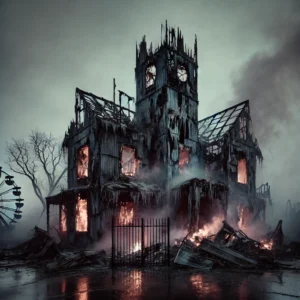
On May 11, 1984, a horrifying blaze engulfed the Haunted Castle at Six Flags Great Adventure in Jackson Township, New Jersey, resulting in one of the most tragic theme park accidents ever recorded. The fire claimed the lives of eight teenagers, leaving a lasting impact on amusement park safety regulations.
The Haunted Castle Attraction
Six Flags Great Adventure was known for offering a mix of thrilling rides and attractions, but the Haunted Castle was different. Opened in 1979, the Haunted Castle was a walkthrough haunted house designed to thrill parkgoers with dark, twisting corridors, eerie effects, and costumed actors. It was a seasonal attraction, constructed using a series of trailers connected to form a maze-like interior. While it provided temporary chills to thousands of visitors, it would soon be the scene of unimaginable horror.
The Fire
On May 11, 1984, a routine day at the park turned deadly when a fire broke out in the Haunted Castle. The source of the fire was never officially determined, but many investigators believed it was caused by arson—a tragic act of recklessness that had devastating consequences. The fire spread quickly, fueled by flammable materials used to construct the castle’s interior, and strong winds turned the building into a furnace.
Inside the attraction, eight teenagers became trapped. The structure’s dark, confusing layout made it difficult for the victims to find an exit, and many were unaware that an emergency was unfolding until it was too late. By the time emergency responders arrived, the fire had consumed the entire attraction, and the teens were found burned beyond recognition.
Lack of Safety Measures
One of the most controversial aspects of the Haunted Castle fire was the lack of fire safety measures in the structure. At the time, the attraction was classified as a temporary building, meaning it was not subject to the same stringent fire codes as permanent structures. There were no sprinklers or smoke detectors installed, and exits were not clearly marked.
Although the local fire department had inspected the park previously, no violations were noted due to the classification of the Haunted Castle as temporary. This loophole in the law, coupled with the nature of the attraction, created a recipe for disaster.
Aftermath and Legal Battle
The tragedy led to widespread outrage and grief. The families of the victims demanded accountability, and Six Flags found itself in the center of a legal and media firestorm. The company was charged with aggravated manslaughter, but ultimately, they escaped conviction. The court ruled that Six Flags could not be held liable because the Haunted Castle was, legally, a temporary structure not requiring fire safety features.
This verdict led to increased scrutiny of amusement park regulations, especially those concerning safety in temporary attractions. In the aftermath of the fire, fire codes were rewritten, making it mandatory for even temporary structures to install sprinklers, smoke detectors, and provide clear exits.
A Legacy of Change
The Haunted Castle fire marked a turning point in amusement park safety protocols. It highlighted the dangers of overlooking fire safety in entertainment venues and led to nationwide changes in how temporary attractions are regulated. Today, the disaster serves as a reminder of the tragic consequences that can occur when safety is compromised for the sake of entertainment.

For the families of the eight teenagers who perished that day, the Haunted Castle fire remains a heartbreaking memory of lives cut short. The attraction that once provided thrills to so many visitors became a symbol of preventable tragedy and loss.