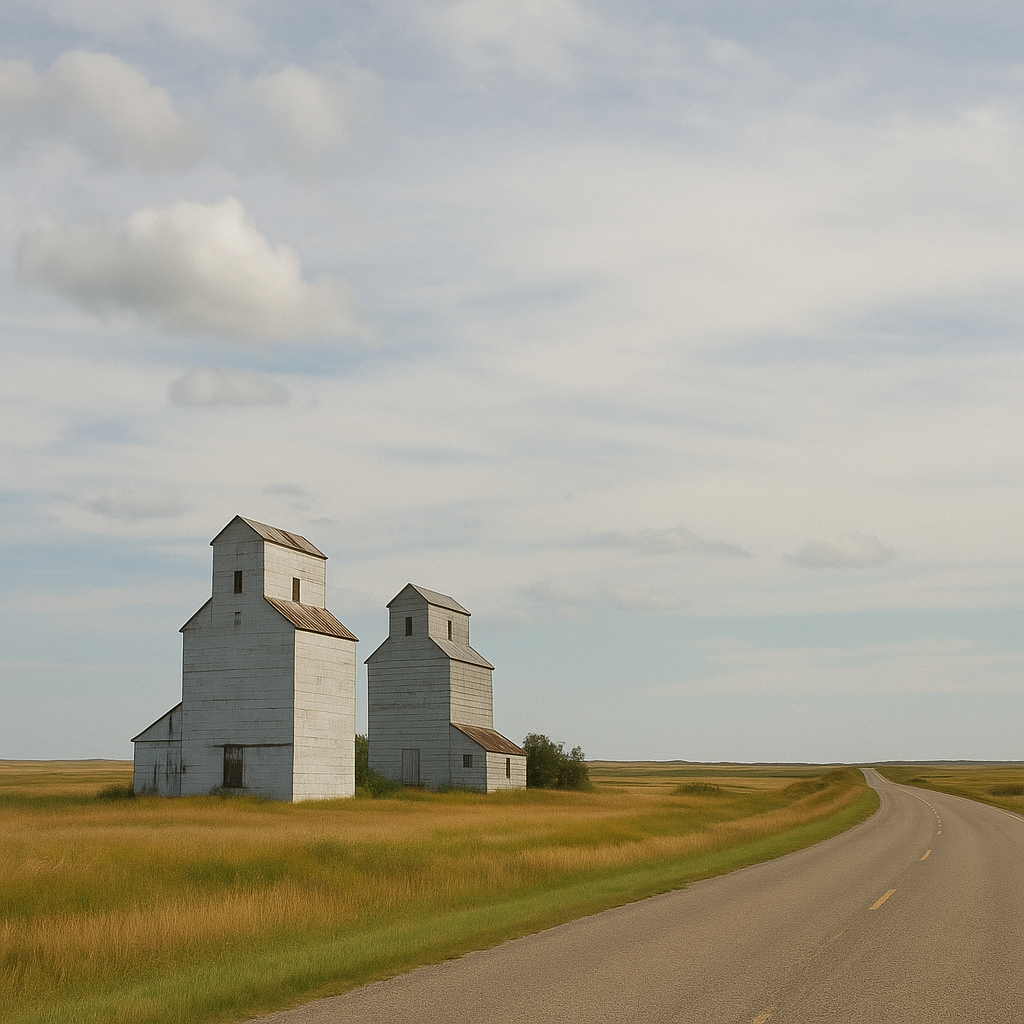
Barton, North Dakota, is a small unincorporated community in Pierce County, nestled among the vast prairie landscapes that define the state. Like many rural towns across North Dakota, Barton was born during the era of westward expansion and settlement, when the Great Northern Railway cut across the state in the late 19th and early 20th centuries. Its location near fertile farmland and the railroad made it an important stop for farmers and travelers alike.
Founded as an agricultural hub, Barton quickly grew around grain elevators, general stores, and small businesses that served the surrounding farmsteads. The town was incorporated in 1906 and became a close-knit community, representative of the pioneering spirit that defined rural America.
The Role of the Railroad
The railroad was central to Barton’s creation and early success. It connected local farmers to larger markets, making it possible to transport wheat, barley, and other grains efficiently. For small towns like Barton, grain elevators became both landmarks and lifelines, towering over the landscape as symbols of progress and survival.
The coming of the railway also meant Barton attracted settlers of diverse backgrounds, many of them German and Scandinavian immigrants seeking opportunity in the Dakotas. This mix of cultural traditions left lasting imprints on the community’s churches, schools, and social gatherings.

For decades, Barton was a lively place with the kinds of amenities rural families depended on. General stores stocked supplies that farm families couldn’t produce themselves, schools provided education close to home, and community halls were centers for dances, meetings, and celebrations.
Like many towns in the Upper Midwest, Barton’s pace of life was set by the agricultural calendar. Spring planting, summer cultivation, autumn harvest, and long, cold winters defined daily rhythms. Neighbors leaned on one another to endure blizzards, droughts, and economic ups and downs.
Decline and Unincorporation
Barton’s story also reflects a broader trend across North Dakota: rural depopulation. As farm technology improved and fewer hands were needed to manage large acreages, populations in small towns dwindled. Younger generations left for bigger cities or other states, seeking jobs and educational opportunities.
In 1997, Barton officially disincorporated, ceasing to function as an incorporated town. What remains today is a scattering of houses, farmsteads, and remnants of the once-thriving community. Barton may not appear on many modern maps as a bustling town, but it lives on in the memories of those who grew up there and in the records of Pierce County’s history.
Barton Today
Although Barton is no longer an incorporated municipality, the spirit of the town persists. It remains a marker of the region’s settlement era, a reminder of the challenges and triumphs faced by farming families. Old grain elevators and weathered buildings still dot the landscape, testaments to a time when the railroad and agriculture wove together to sustain small prairie communities.
Visitors driving through the area may find little more than open skies, prairie grasslands, and scattered farms, but Barton’s significance lies in its story. It represents both the promise and fragility of rural America—how communities rise with opportunity and decline with shifting economies and population trends.
A Place in North Dakota’s Heritage
Barton may be small, but it holds a place in the larger narrative of North Dakota’s settlement and development. Like hundreds of similar towns across the Great Plains, it tells the story of immigrant families, railroad expansion, agricultural life, and the enduring resilience of people on the land. For historians and locals alike, Barton remains a touchstone of heritage, offering lessons about change, survival, and the lasting impact of even the smallest towns.