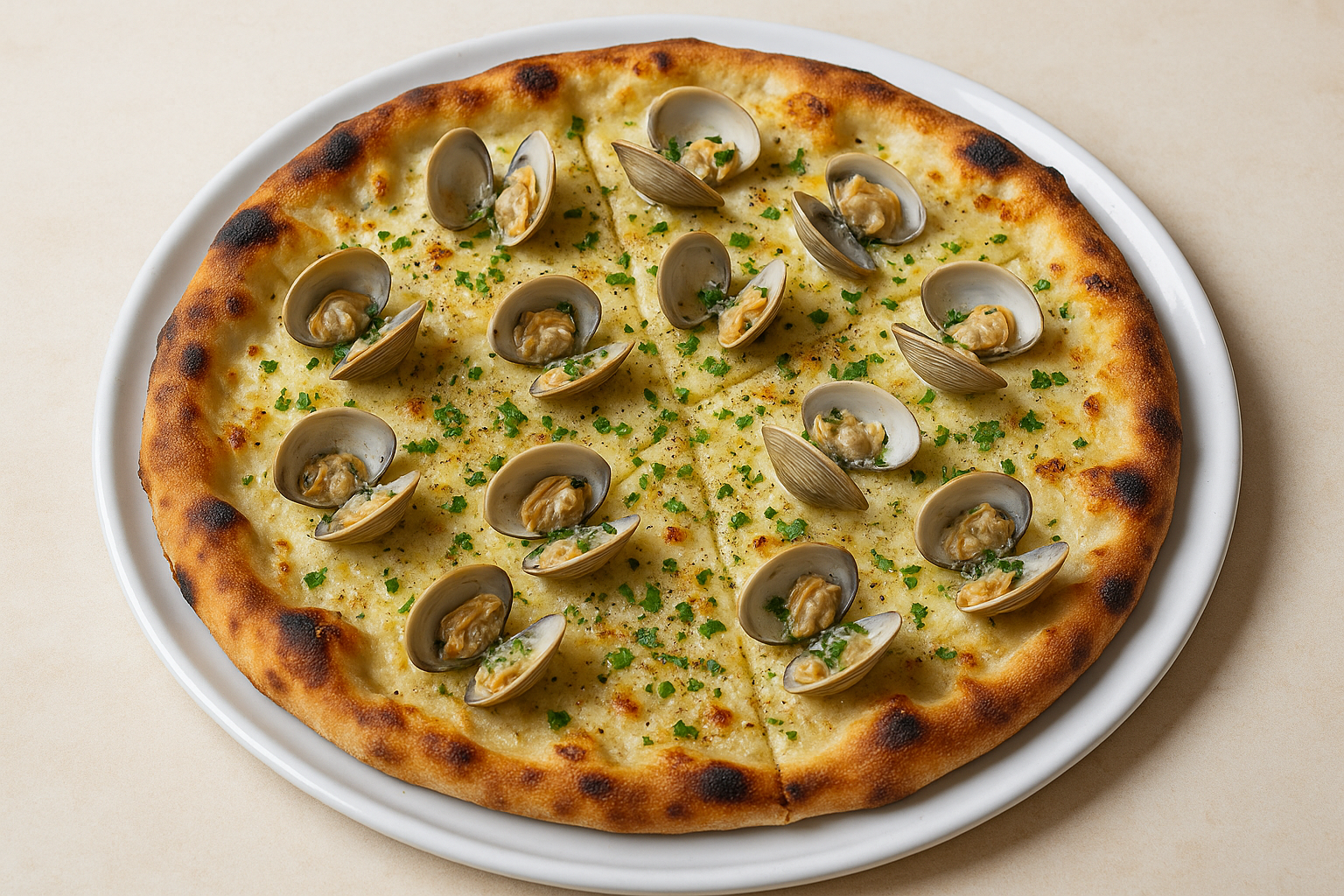
White clam pizza, often called “apizza” in its birthplace of New Haven, Connecticut, is one of the most distinctive regional pizzas in the United States. Unlike traditional tomato-sauce-based pies, this pizza is built on a foundation of olive oil, garlic, oregano, grated cheese, and fresh littleneck clams. Its origins are traced to Frank Pepe Pizzeria Napoletana, one of America’s most celebrated pizzerias, founded in 1925 by Italian immigrant Frank Pepe.
While Pepe’s started by serving tomato pies, it was in the mid-20th century that the white clam pizza emerged. By the 1960s, Pepe’s was already a cornerstone of New Haven dining culture, and Frank Pepe himself was experimenting with seafood toppings that reflected the region’s coastal identity. Fresh clams, plentiful along Long Island Sound, became the signature ingredient that set this pizza apart.
The Culinary Innovation
What makes white clam pizza unique is its simplicity and boldness. Without tomato sauce, the flavors of garlic, herbs, and briny clams shine through. The pizza is typically baked in a coal-fired oven, which chars the crust and adds a smoky depth to the pie. A dusting of pecorino Romano or parmesan provides saltiness, while fresh parsley offers a finishing touch of color and freshness.
The choice to use clams was practical as well as inventive. Clams were inexpensive, abundant, and popular in New England cooking. This connection between land and sea gave the white clam pizza a flavor profile that was unmistakably regional yet surprisingly universal in appeal.
From Local Favorite to National Fame
Initially, the white clam pizza was a specialty of New Haven locals who knew where to find the city’s coal-fired pizza houses. Over time, food critics, writers, and travelers helped elevate its reputation. Pepe’s, along with rival New Haven pizzerias such as Sally’s Apizza and Modern Apizza, became destinations for food enthusiasts eager to taste this one-of-a-kind dish.
The popularity of white clam pizza expanded far beyond Connecticut in the late 20th century. As food television, travel writing, and culinary tourism grew, so did the legend of Pepe’s clam pie. Today, it is widely regarded as one of the most distinctive pizzas in America and often appears on “best pizza” lists compiled by national publications.
A Polarizing but Beloved Dish
Despite its acclaim, white clam pizza remains a polarizing dish. Some pizza traditionalists are skeptical of seafood on pizza, while others see it as one of the finest examples of creative Italian-American cuisine. Its briny, garlicky character makes it a bold choice, not necessarily for everyone, but deeply rewarding for those who appreciate its balance of flavors.
The pizza also speaks to the adaptability of Italian-American cooking. Immigrants brought their traditions from Naples but were not afraid to integrate local ingredients into familiar recipes. In this case, New Haven’s access to fresh clams gave birth to a dish that was both authentic and innovative.
The Modern Legacy
Today, Frank Pepe’s remains the most famous purveyor of white clam pizza, and its expansion beyond New Haven has introduced the dish to wider audiences. Locations in Massachusetts, New York, Rhode Island, and beyond serve the same coal-fired clam pie that first made waves in the mid-20th century.
Other pizzerias, both in New England and elsewhere, have also adapted the idea, offering their own interpretations. Some use chopped clams, others whole littlenecks; some add bacon or hot peppers for a twist. Yet the essential core of white clam pizza—garlic, olive oil, cheese, and clams on a blistered crust—remains unchanged.

White clam pizza is more than just a regional specialty. It is a reflection of immigrant ingenuity, New England’s coastal heritage, and America’s evolving culinary landscape. From its humble beginnings in New Haven to its status as a nationally celebrated dish, the white clam pizza continues to inspire debate, delight palates, and showcase the limitless possibilities of what pizza can be.