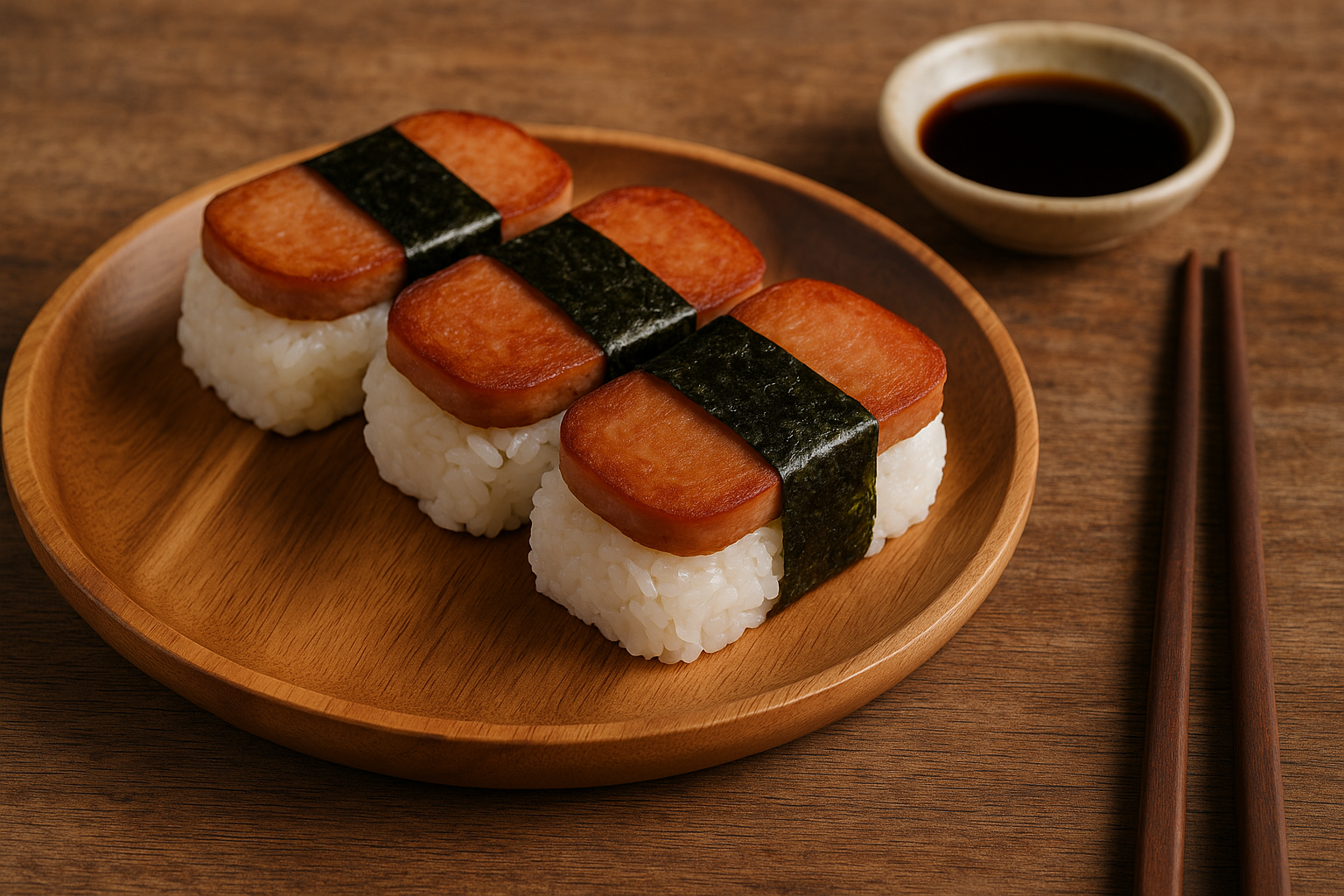
Spam musubi is a simple but iconic Hawaiian snack consisting of a slice of grilled Spam atop a block of rice, wrapped together with a strip of nori (seaweed). At first glance, it may seem like an unusual food pairing, but this handheld treat has become one of the most recognizable and beloved foods across the Hawaiian islands. Convenience stores, lunch counters, and family kitchens alike serve up countless variations, cementing its place as both comfort food and cultural symbol.
Roots in Wartime Hawaii
The history of Spam musubi traces back to World War II. During this period, the U.S. military imported massive amounts of Spam to feed soldiers stationed in Hawaii and throughout the Pacific. Spam’s long shelf life and affordability made it a wartime staple, and when fresh meat was scarce, it became a vital source of protein.
Hawaiians, especially Japanese American families, adapted the canned meat into their own cooking traditions. By pairing Spam with rice and seaweed—ingredients deeply tied to Japanese cuisine—they created a dish that merged necessity with creativity. Spam musubi is widely believed to have been popularized in the postwar years, likely first appearing in local kitchens before spreading to convenience stores and restaurants.
The Influence of Japanese Onigiri
Spam musubi has roots in Japanese onigiri, rice balls often wrapped in seaweed and filled with fish or pickled vegetables. Japanese immigrants in Hawaii brought these culinary traditions with them, and when Spam entered the food supply, it naturally replaced traditional fillings. Over time, the snack evolved into its own unique form, distinctly Hawaiian but still reminiscent of its Japanese counterpart.
Popularization and Everyday Appeal
By the 1980s and 1990s, Spam musubi had become a fixture of local convenience stores, particularly chains like 7-Eleven Hawaii, which still sells fresh musubi daily. Its grab-and-go nature makes it the perfect snack for busy mornings, school lunches, or beach picnics. It is inexpensive, portable, and filling—a food that captures the essence of everyday island life.
Hawaiians also began adding their own spins to the musubi, with variations including teriyaki-glazed Spam, egg-topped versions, and even spicy or furikake-seasoned rice. Some restaurants serve gourmet interpretations, but the humble homemade musubi remains the gold standard.
Spam Musubi as a Cultural Symbol
Spam musubi is more than a snack—it is a symbol of Hawaii’s unique food culture. It represents the blending of immigrant traditions with local adaptations, born from wartime necessity but thriving as a beloved comfort food. Spam itself holds a complicated place in Hawaii’s culinary history, but in musubi form, it has transcended its humble beginnings.
The dish also reflects Hawaii’s openness to fusion cuisine. Just as Spam musubi combines Japanese, American, and island influences, Hawaii’s food culture thrives on innovation while honoring tradition. From plate lunches to poke bowls, the islands celebrate flavors from many backgrounds, and musubi fits seamlessly into this tapestry.
A Lasting Legacy
Today, Spam musubi is celebrated both locally and abroad. Tourists often encounter it for the first time in Hawaii, sometimes surprised by how much they enjoy the salty-sweet combination. Food enthusiasts worldwide have recreated the snack, making it a global ambassador of Hawaiian comfort food.
Despite evolving tastes and the rise of new food trends, Spam musubi endures because of its simplicity and cultural resonance. For locals, it is not just food—it is nostalgia, identity, and a reminder of resilience during difficult times.

Spam musubi may look like just rice, Spam, and seaweed, but its story is layered with history, creativity, and cultural blending. From its wartime origins to its status as an everyday Hawaiian favorite, Spam musubi continues to connect generations of people with the flavors of the islands.