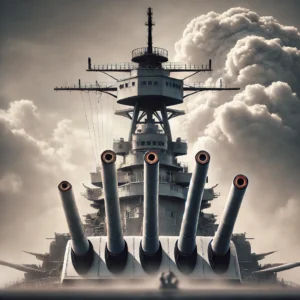
On April 19, 1989, a catastrophic event occurred aboard the USS Iowa (BB-61), a battleship that had served the United States in some of its most pivotal conflicts. During a routine gunnery exercise off the coast of Puerto Rico, an explosion tore through the Number Two gun turret, killing 47 sailors in one of the deadliest peacetime naval disasters in American history. The incident, now known as the USS Iowa Turret Disaster, remains a somber reminder of the inherent dangers that naval personnel face—even outside of active combat.
The USS Iowa and Its Legacy
The USS Iowa was a proud ship with a storied history. Commissioned in 1943 during World War II, she was one of four Iowa-class battleships built by the U.S. Navy. Known for her speed and firepower, the Iowa played a key role in numerous operations, including the bombardment of Japanese positions during World War II, and saw action again during the Korean War. In the 1980s, under President Ronald Reagan’s naval expansion program, the Iowa was modernized and brought back into active service, becoming one of the most formidable vessels in the fleet once again.
By 1989, the USS Iowa was part of the U.S. Atlantic Fleet, engaging in regular training exercises to maintain combat readiness. However, what should have been a routine drill became a day of tragedy.
The Disaster: April 19, 1989
On the morning of April 19, the crew of the USS Iowa was preparing to fire the ship’s massive 16-inch guns during a gunnery exercise. These guns, capable of launching 2,700-pound shells over 20 miles, were among the largest naval weapons in existence. At 9:55 AM, as preparations were underway inside the Number Two turret, an explosion occurred without warning.
The blast was devastating, ripping through the confined space of the turret and causing a massive fireball that killed 47 sailors instantly. The damage to the turret was catastrophic, with large pieces of equipment blown apart and the interior engulfed in flames. Smoke poured out of the turret, visible to other ships in the exercise group. Despite the severity of the explosion, quick action by the remaining crew prevented further fires or explosions from spreading to other parts of the ship.
The cause of the explosion was not immediately clear, and the loss of life left the entire crew of the Iowa in mourning.
The Investigation and Controversy
In the immediate aftermath of the explosion, the U.S. Navy launched an investigation into what had caused such a horrific event. Initially, the Navy considered several possibilities, including accidental ignition of the powder bags used to fire the shells, an equipment malfunction, or a mechanical failure within the turret.
However, when those possibilities were ruled out, the investigation took a controversial turn. The Naval Investigative Service (NIS) focused on the idea that the explosion had been caused intentionally. The investigation targeted one sailor in particular—Gunner’s Mate 2nd Class Clayton Hartwig, one of the 47 sailors who had died in the blast. The NIS suggested that Hartwig might have deliberately set off the explosion as part of a suicide attempt, possibly due to personal troubles or tensions with other crew members.
This theory was based largely on circumstantial evidence, including claims about Hartwig’s personal relationships and behavior in the months leading up to the disaster. However, the idea that the explosion had been a deliberate act caused outrage among the families of the deceased, who felt that the Navy was unfairly blaming Hartwig to avoid responsibility for a potential mechanical failure.
Flawed Findings and a Second Inquiry
Amid mounting public pressure and media scrutiny, the U.S. Congress launched a second investigation into the USS Iowa disaster. This inquiry, led by the General Accounting Office (GAO), found significant flaws in the Navy’s initial investigation. The GAO report concluded that there was no credible evidence to support the claim that Hartwig had intentionally caused the explosion.
Instead, the report suggested that the explosion was likely the result of an accident, possibly caused by improper loading procedures or a malfunction within the turret’s intricate equipment. The handling of powder bags—critical to firing the massive guns—was identified as a potential weak point in safety protocols.
In 1991, the Navy officially retracted its earlier findings, stating that there was no conclusive evidence to determine the exact cause of the explosion. The decision to blame Hartwig was discredited, and the Navy expressed regret to his family.
The Legacy of the USS Iowa Disaster
While the exact cause of the USS Iowa turret explosion remains uncertain, the loss of 47 sailors continues to be mourned by their families, shipmates, and the Navy community. Memorials have been established to honor the men who died that day, and their names are remembered on plaques and at memorial services.
The USS Iowa itself was decommissioned in 1990, only a year after the disaster. Today, the battleship serves as a museum ship, permanently docked in Los Angeles, California, where visitors can learn about her long history, including the tragic events of April 1989. The Iowa continues to symbolize the bravery and sacrifice of those who serve in the Navy, both in wartime and in peace.

The USS Iowa Turret Disaster of 1989 is a stark reminder of the dangers that military personnel face, even during routine operations. The tragedy took the lives of 47 sailors and left unanswered questions that have never been fully resolved. Nevertheless, the memory of those lost lives on, commemorated by their families and by the Navy that they served with honor.