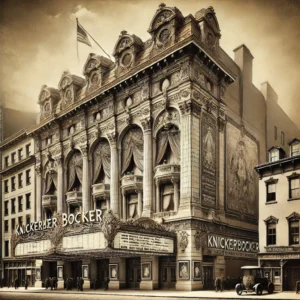
The Knickerbocker Theatre in Washington, D.C., was once a symbol of the city’s vibrant arts scene, drawing thousands of patrons for movies and performances. However, the theater is tragically remembered for one of the worst disasters in the city’s history—the Knickerbocker Theatre collapse of 1922. The event resulted in devastating loss of life and profound changes in how the city approached construction safety.
A Grand Beginning
Located in the Adams Morgan neighborhood, the Knickerbocker Theatre opened its doors in 1917. Designed by architect Reginald W. Geare, the theater was known for its massive seating capacity, able to hold over 1,500 guests, and its elegant architectural style. The Knickerbocker quickly became a popular venue for both films and live performances, solidifying its place as one of Washington’s premier entertainment destinations.
The theater was owned by Harry M. Crandall, a prominent businessman and owner of several theaters in the area. The Knickerbocker’s combination of luxury and state-of-the-art design made it an essential part of the city’s cultural landscape.
The Knickerbocker Storm
On January 28, 1922, a snowstorm of historic proportions struck Washington, D.C. The storm, later dubbed the Knickerbocker Storm, dumped an unprecedented 28 inches of snow on the city, paralyzing traffic and burying buildings under a thick white blanket. As residents sought refuge from the cold and entertainment to pass the time, many flocked to theaters, including the Knickerbocker.
Inside the theater, a large crowd gathered for a screening of a silent film. As the snow continued to pile up, few could have anticipated the danger looming overhead.
The Collapse
At approximately 9:00 p.m., during the movie’s intermission, the unthinkable happened. The theater’s flat roof, weighed down by tons of snow, suddenly gave way, collapsing onto the audience below. The roof crash brought down portions of the walls, and within moments, chaos erupted as debris covered the crowd.
98 people lost their lives, and 133 others were injured. Many of the victims were crushed beneath heavy beams, while others suffered injuries from falling debris and panic-stricken attempts to escape. The collapse turned what had been a night of entertainment into a scene of horror and grief.
The Aftermath
The disaster sent shockwaves through the nation’s capital. Rescue efforts were slow due to the massive snowdrifts blocking streets and the scale of the destruction. Survivors were pulled from the wreckage throughout the night, while bodies were lined up in makeshift morgues.
The collapse of the Knickerbocker Theatre left Washington, D.C., in mourning. Many of the victims were well-known figures in the community, and the scale of the disaster overwhelmed local resources. In the weeks following the tragedy, architect Reginald W. Geare came under scrutiny for the building’s structural design, particularly the inadequacy of the roof to withstand heavy snow. Although no criminal charges were filed, Geare’s career suffered greatly, and he lived the rest of his life in relative obscurity.
Harry Crandall, the theater’s owner, was devastated by the tragedy. He faced numerous lawsuits from the families of victims, but more than the financial burden, he was deeply affected by the loss of life at his theater. The emotional toll on Crandall was profound, and in 1937, still haunted by the event, he took his own life.
Changes in Building Safety
The Knickerbocker disaster led to significant changes in building codes and construction standards, particularly regarding the structural integrity of roofs in areas prone to heavy snow. Engineers and architects studied the collapse to understand what went wrong, resulting in new regulations for snow load considerations and improved safety measures for public spaces.
The Legacy of the Knickerbocker
Today, the site where the Knickerbocker Theatre once stood is home to a commercial building, but a plaque commemorates the victims of the collapse. The disaster remains one of Washington, D.C.’s worst tragedies, a stark reminder of the importance of structural safety and the unpredictable power of nature.

Though the theater is long gone, the story of the Knickerbocker collapse endures as a part of Washington’s history. The lessons learned from that fateful night continue to influence building practices and safety regulations, ensuring that the city’s architectural legacy remains both beautiful and safe for future generations.