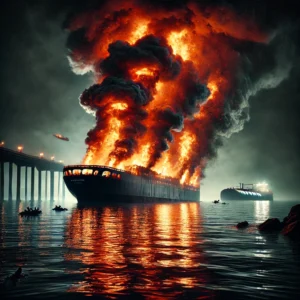
On December 20, 1987, the Philippines witnessed one of the most horrific maritime disasters in history—the Doña Paz Ferry Disaster. With over 4,300 lives lost, this tragedy has remained etched in the collective memory as the deadliest peacetime maritime disaster in the world. The incident exposed the stark realities of inadequate safety measures, overcrowding, and the lack of regulation in maritime transportation.
The Journey of MV Doña Paz
The MV Doña Paz was a passenger ferry operated by Sulpicio Lines, a major shipping company in the Philippines. On the fateful night, the ferry was en route from Tacloban City, Leyte, to Manila, with a scheduled stop in Catbalogan. While the ferry had a registered capacity of 1,518 passengers, it was reportedly overloaded with more than 4,000 passengers on board—many of whom were unregistered and traveling without proper tickets.
The atmosphere aboard the Doña Paz was festive. Many passengers were looking forward to reuniting with loved ones for the Christmas season, unaware that their joyous anticipation would turn into unimaginable terror.
Collision in the Tablas Strait
At around 10:30 PM, as the ferry sailed through the Tablas Strait near Mindoro, it collided with the MT Vector, an oil tanker carrying 8,800 barrels of gasoline and other highly flammable petroleum products. The collision triggered a chain of catastrophic events.
Upon impact, the cargo aboard the Vector ignited, setting both ships ablaze within minutes. The intense flames engulfed the ferry, and passengers were left scrambling for safety as the fire spread uncontrollably. In the ensuing panic, many jumped into the water, only to be overcome by the thick black smoke or burned by the flaming oil slick on the sea’s surface.
A Devastating Death Toll
The official death toll was staggering. While the ferry’s manifest listed only 1,583 passengers and crew, investigators and survivors reported that over 4,300 people were aboard the Doña Paz, far exceeding its maximum capacity. The sheer number of unlisted passengers made it impossible to account for everyone.
In the chaos, only 24 survivors were found—21 from the Doña Paz and 3 from the Vector. These survivors were rescued by nearby vessels that responded to the distress calls. The official tally makes the Doña Paz disaster the deadliest peacetime maritime incident in history, surpassing even the infamous Titanic sinking.
Investigation and Causes
The investigation that followed revealed a series of failures and oversights:
- Overcrowding: The Doña Paz was packed with passengers beyond its legal capacity, and many were not listed in the ship’s manifest, making it difficult to track the actual number of casualties.
- Safety Failures: Testimonies from survivors indicated that the ferry’s crew were unprepared for such a catastrophe. No distress signals were sent, and passengers had little to no access to life vests or emergency equipment. The crew themselves were reportedly unable to guide passengers during the chaos.
- The Vector’s Condition: The MT Vector was found to be unseaworthy. The tanker was sailing without a valid license, and its crew lacked proper training to handle hazardous materials. The vessel’s condition raised serious questions about why it had been allowed to operate.
- Fire and Explosion: The collision instantly ignited the Vector’s cargo, causing a rapid and devastating fire. The combination of highly flammable petroleum and the absence of fire safety equipment aboard the Doña Paz spelled disaster.
The Aftermath: Accountability and Reforms
In the aftermath of the disaster, public outrage grew, with calls for improved maritime safety regulations. However, no one was held fully accountable for the tragedy. Both the owners of the Doña Paz and the Vector denied responsibility, and lawsuits dragged on for years. The Philippine government and maritime authorities were also criticized for their lack of oversight and failure to enforce safety standards in the country’s shipping industry.
While some reforms were introduced to strengthen maritime safety protocols in the Philippines, the scale of the disaster and the depth of the systemic issues became clear. Many felt that the authorities failed to take adequate steps to prevent another such disaster, highlighting the weaknesses in the country’s transportation safety framework.
Legacy of the Disaster
The Doña Paz Ferry Disaster remains a stark reminder of the dangers of lax safety standards and overcrowding in passenger transport. The stories of the survivors, haunted by the memories of that night, continue to resonate. Every December 20, Filipinos remember the lives lost in the disaster, offering prayers and memorials for those who perished.
In global maritime history, the disaster stands as a tragic lesson on the importance of enforcing safety regulations and preventing negligence in passenger and cargo vessels alike.

The Doña Paz tragedy is not just a Philippine story—it is a universal tale of human loss, regulatory failure, and the long-lasting impact of disaster. More than 30 years later, the disaster still serves as a sobering reminder of what can happen when safety is compromised for profit. The world continues to mourn those lost, and the Doña Paz ferry disaster remains a symbol of both loss and the enduring hope for safer seas.