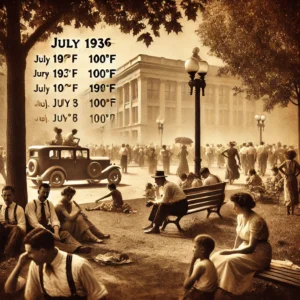
The summer of 1936 was one of the most grueling and punishing seasons in North American history. The continent experienced an intense heat wave that shattered temperature records, devastated communities, and left a legacy of environmental and societal challenges. Occurring during the Dust Bowl and the Great Depression, this deadly heat wave added another layer of misery to an already suffering population.
A Summer of Record-Breaking Temperatures
The 1936 heat wave gripped much of the United States and parts of Canada, particularly in the Midwest and the Plains, with temperatures soaring into unprecedented heights. Cities across the country saw thermometers registering over 100°F (38°C) for weeks on end. One of the most extreme examples came on July 5, 1936, when Steele, North Dakota, recorded a blistering 121°F (49.4°C), one of the highest temperatures ever documented in North America.
These unbearable conditions persisted throughout the summer, from June into September. Unlike more fleeting heat waves, which might last for a few days, the 1936 heat wave lingered, straining resources and pushing people to their physical and emotional limits. In cities such as Chicago, St. Louis, and Minneapolis, urban residents faced daily highs that often surpassed 110°F (43°C), making it nearly impossible to escape the heat.
Impact on Agriculture and the Dust Bowl Connection
The heat wave struck at a time when the Midwest and Great Plains were already suffering from the effects of the Dust Bowl. The prolonged drought had left soil dry and barren, and the intense heat only made matters worse. Farmers watched helplessly as their crops, especially corn and wheat, shriveled under the oppressive sun. Livestock perished from the lack of water and food, and massive dust storms swept through the plains, creating scenes of devastation.
This agricultural collapse hit an economy that was already reeling from the Great Depression. Many farmers had lost their livelihoods, and the lack of food led to widespread hunger and price increases. The heat wave pushed thousands of people to abandon their homes in search of better conditions. The migration of displaced families, often moving toward California, became a defining aspect of this period, famously depicted in John Steinbeck’s The Grapes of Wrath.
The Human Toll: Over 5,000 Deaths
The 1936 heat wave remains one of the deadliest natural disasters in U.S. history, with over 5,000 deaths attributed to heat-related causes. In an era before widespread air conditioning and refrigeration, most people had limited options for staying cool. The urban poor, in particular, suffered immensely, with heatstroke and dehydration claiming lives in densely populated cities.
Hospitals became overwhelmed as thousands of people succumbed to heat exhaustion, and morgues ran out of space for the bodies. Cities reported spikes in mortality rates, with Chicago alone seeing over 700 deaths during the peak of the heat wave. Even at night, temperatures often remained above 90°F (32°C), offering no relief and amplifying the public health crisis.
Coping with the Heat
With no modern cooling technologies, people turned to makeshift methods to survive the relentless heat. Families would sleep outside on rooftops or in parks, hoping to catch a breeze. Some neighborhoods set up makeshift cooling centers, where children could splash in water fountains or adults could rest in the shade. Ice deliveries became a crucial service, though in many areas, there simply wasn’t enough to go around.
Businesses and government offices adapted by changing their working hours, with many opting for early mornings or late evenings to avoid the heat of midday. Some factories shut down entirely, unable to keep machines cool enough to operate safely. Newspapers of the time often included advice on how to stay cool, ranging from drinking plenty of water to avoiding physical exertion.
A Lasting Legacy
The 1936 North American heat wave left a lasting mark on history. It reinforced the vulnerability of both rural and urban populations to extreme weather, underscoring the need for better preparation and response measures. In the years following the heat wave, advances were made in weather forecasting, and heat mitigation strategies, such as the development of air conditioning and improved irrigation systems, gained more attention.
The agricultural collapse and human suffering during the heat wave also catalyzed reforms in land management and farming practices. Programs were introduced to combat soil erosion and drought, laying the groundwork for more sustainable agricultural techniques.
In a broader sense, the heat wave, combined with the Dust Bowl and the Great Depression, remains a symbol of endurance in the face of overwhelming hardship. The resilience of communities during this period is still remembered as part of America’s story of survival and recovery.

The 1936 North American heat wave was not just a weather event but a catastrophe that reshaped the lives of millions. Its severity, duration, and deadly impact are a stark reminder of the power of nature and the vulnerabilities societies face. The lessons learned from that summer of heat and hardship continue to influence disaster preparedness and environmental management to this day.