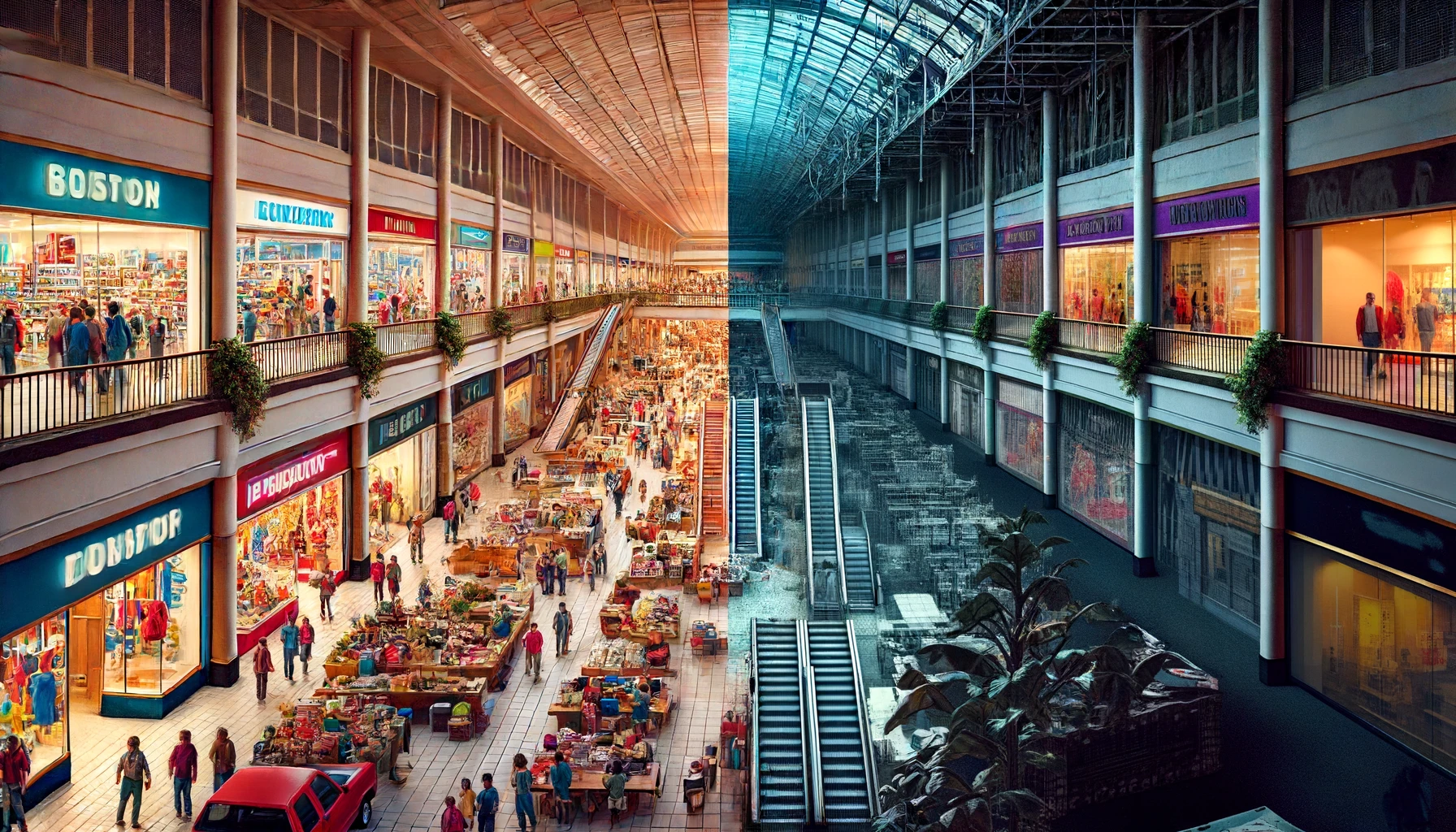
The American mall, once the epicenter of social life and consumer culture, has undergone significant changes since its inception. From the bustling corridors filled with shoppers to the eerily empty spaces of abandoned malls, the story of the American mall reflects broader economic and societal shifts.
The Birth of the Mall
The concept of the American mall was pioneered in the mid-20th century, with Victor Gruen, an Austrian architect, often credited as the “father of the mall.” His vision was to create a communal space where people could shop, socialize, and experience a sense of community.
The 1950s and 1960s saw the rapid construction of malls across the United States. Suburban expansion and the growing car culture fueled the mall boom. Malls became symbols of American prosperity and modernity, offering a one-stop shopping experience with department stores, specialty shops, food courts, and entertainment venues.
The Golden Age
By the 1980s and 1990s, malls had firmly established themselves as social and economic hubs. Teenagers flocked to malls as hangout spots, families enjoyed weekend outings, and the variety of stores provided something for everyone. Major holidays, like Black Friday and Christmas, saw malls packed with shoppers, cementing their place in American culture.
Some malls, like the Mall of America in Minnesota, became iconic landmarks. Opened in 1992, the Mall of America boasted over 500 stores, an indoor amusement park, and an aquarium, attracting millions of visitors annually.
The Decline Begins
The early 2000s marked the beginning of the decline for many malls. The rise of online shopping significantly impacted brick-and-mortar stores. E-commerce giants like Amazon offered the convenience of home shopping, free shipping, and competitive prices, drawing consumers away from traditional malls.
Social changes also played a role. The younger generation, which once saw malls as key social spaces, began to prefer online interactions and experiences over physical gatherings at malls. Additionally, the economic recession of 2008 dealt a heavy blow to consumer spending, causing many retail stores to close.
The Fall
As anchor stores like Sears, JCPenney, and Macy’s closed their doors, the ripple effect led to the closure of smaller stores within the malls. The once-vibrant corridors of malls turned into ghostly spaces with shuttered storefronts and declining foot traffic.
The COVID-19 pandemic accelerated the decline of malls. With lockdowns and social distancing measures in place, many malls faced temporary closures. Even as restrictions lifted, the fear of virus transmission and the convenience of online shopping kept people away from physical stores.
In response to the decline, some malls have been repurposed for other uses. Abandoned malls have been transformed into office spaces, community colleges, healthcare centers, and mixed-use developments. These adaptive reuse projects aim to breathe new life into defunct spaces and meet the evolving needs of communities.
The Future
Despite the challenges, some malls have adapted by incorporating experiential elements to attract visitors. Entertainment options, dining experiences, and interactive events are becoming central to the mall experience. Additionally, the rise of pop-up shops and local artisan markets within malls offers a unique shopping experience that cannot be replicated online.
The future of malls may lie in sustainability and community orientation. Integrating green spaces, promoting local businesses, and creating multifunctional areas can help malls become relevant once again. By focusing on experiences and community engagement, malls can reinvent themselves for the modern age.

The rise and fall of the American mall is a narrative that mirrors the economic, social, and technological changes in society. While the golden age of malls may be over, their legacy and potential for reinvention continue to shape the landscape of retail and community spaces.