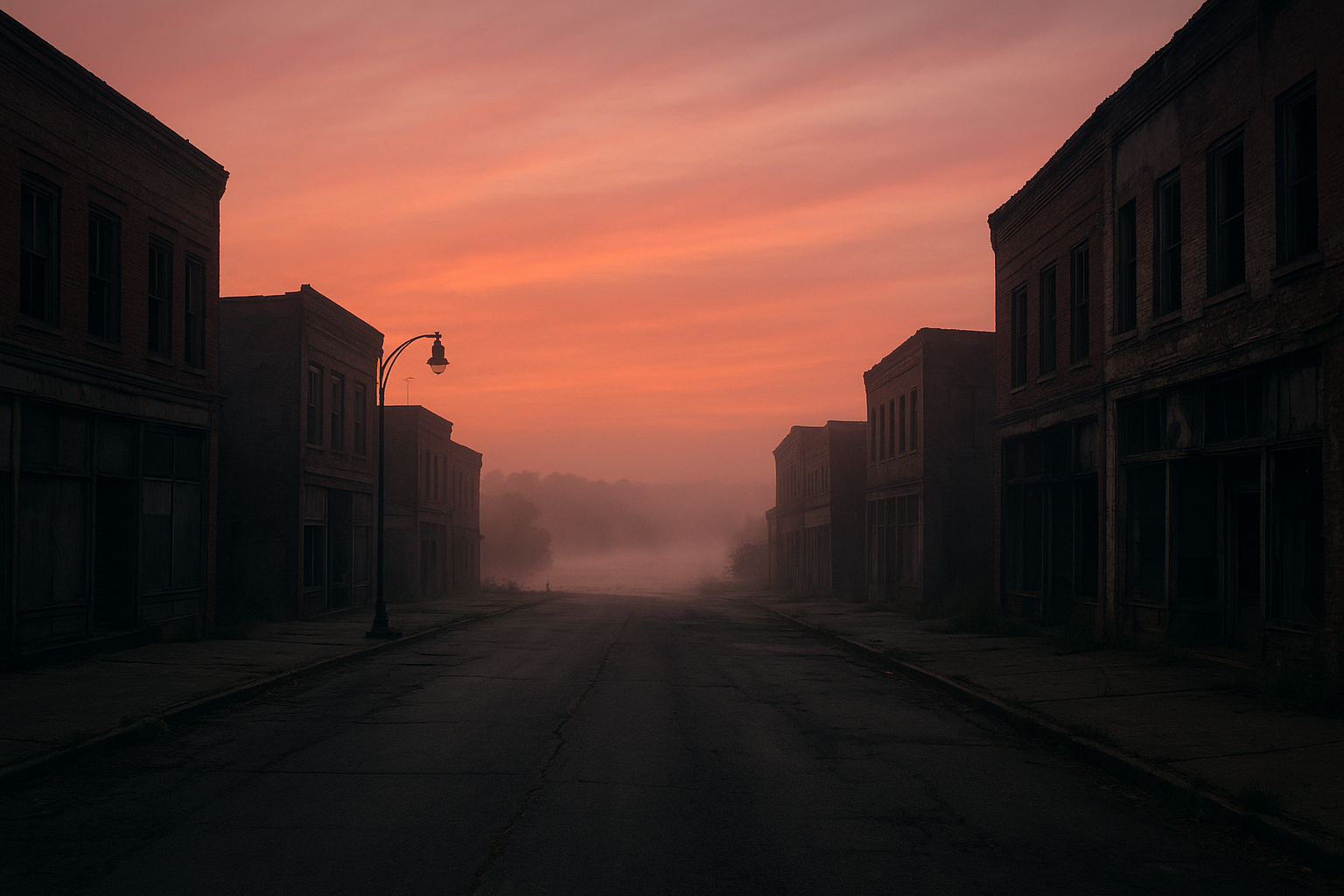
Cairo, Illinois, sits at the confluence of the Ohio and Mississippi Rivers, a location that should have made it one of the most prosperous cities in America. In the 19th century, it was a bustling port town—a crossroads of trade, industry, and opportunity. Riverboats crowded the docks, rail lines carried goods north and south, and its streets were alive with workers, travelers, and merchants.
But as history would have it, Cairo’s prosperity didn’t last. The town that was once a shining symbol of southern Illinois commerce fell into steep decline. What remains today is a haunting shell—a ghost town that whispers stories of conflict, loss, and the chilling rumor of a curse that lingers over its streets.
A City Built on Unsteady Ground
The founding of Cairo in the 1800s was ambitious. Investors believed the city’s location between two of America’s most important rivers guaranteed success. But the geography that made it valuable also made it vulnerable. Frequent flooding plagued the early settlers, forcing the construction of levees and floodwalls that made the town feel more like a fortress than a city.
Over time, the isolation grew. When bridges and highways replaced river traffic, Cairo’s strategic importance faded. The railroad industry slowed, and so did everything else. Yet even as its economy declined, the city’s social tensions grew—setting the stage for something darker.
The Division That Tore Cairo Apart
By the mid-20th century, Cairo was a powder keg of racial tension. Segregation was enforced long after the rest of Illinois had moved on, and violent clashes erupted between the city’s Black residents and the all-white police force. In the 1960s and 1970s, civil rights protests filled the streets.
The National Guard was called in. Businesses shuttered. Families fled. Violence, boycotts, and deep mistrust destroyed what little remained of Cairo’s fragile community fabric. It was said that you could stand on Commercial Avenue and hear only the sound of the wind rattling the broken signs.
And then came the whispers—that something evil had taken hold of the town.
The Curse Begins
Locals tell of a series of unexplained tragedies that followed Cairo’s downfall. Fires erupted in abandoned buildings for no clear reason. Visitors claimed to see ghostly figures near the levee, especially around midnight when the fog rolls in from the rivers.
Some say the curse began when the land was first taken from the original Native inhabitants, who warned that the confluence was sacred ground not meant for settlement. Others trace it to the Civil War era, when soldiers were stationed in Cairo and strange illnesses swept through their camps. A few even claim it’s the restless spirits of those who died during the racial conflicts, unable to find peace in a town that forgot them.
One chilling legend tells of a man who stayed overnight in one of the abandoned hotels and awoke to find handprints pressed into the dust on the walls—small, childlike, and still fresh. He never returned.
Echoes of a Vanished City
Today, Cairo has fewer than 1,700 residents, down from its peak of over 15,000. Whole neighborhoods have been reclaimed by weeds. Churches stand empty, their stained-glass windows cracked and clouded. Schools sit silent, their playgrounds overgrown.
Those who remain speak of strange noises at night—the sound of footsteps on empty streets, laughter echoing from buildings long deserted, and whispers carried on the wind from the riverbanks.
Tourists who come to photograph the ruins often describe an uneasy feeling, as if being watched. The air is heavy, the silence unnatural. Even on bright days, there’s a dimness to the light that seems to hang over the town.
Between the Rivers and the Dead
Cairo’s decline is a story of economics and race, geography and neglect—but also something harder to define. Maybe it’s guilt that haunts the town, or grief made physical by the slow unraveling of a community. Maybe the “curse” is the weight of forgotten history pressing down on the living.
Yet, standing on the levee where the two rivers meet, there’s also beauty—the endless flow of water, the echoes of what once was, and the ghostly promise that nothing truly disappears. Cairo endures, even in ruin, a monument to America’s promise and its failures.

And as night falls over the Mississippi, you might still hear the city breathe—one last whisper from a place that refuses to die.