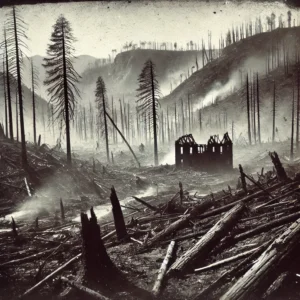
The Yacolt Burn, a devastating wildfire that ignited in late August 1902, stands as one of the most significant natural disasters in the history of the Pacific Northwest. Spanning hundreds of thousands of acres across Washington and Oregon, this catastrophic event reshaped the region’s approach to wildfire management and conservation.
The Genesis of the Yacolt Burn
The fire began in the Yacolt area of Clark County, Washington, fueled by an unusually dry summer and a series of lightning strikes. These strikes ignited small fires that quickly spread, merging into a massive blaze that overwhelmed firefighting efforts. The combination of high winds and drought conditions created an ideal environment for the fire to thrive, leading to rapid escalation.
Extent and Damage
By the time the Yacolt Burn was contained in September, it had consumed approximately 600,000 acres (around 2,400 square kilometers) of forest and land. The destruction was extensive:
- Loss of Life: At least 38 individuals, including both firefighters and civilians, lost their lives as a result of the blaze.
- Property Damage: Hundreds of homes, farms, and businesses were reduced to ashes, leaving many communities in ruin.
- Environmental Impact: The fire caused significant ecological damage, altering landscapes and habitats and leading to long-term consequences for the region’s biodiversity.
The Aftermath and Legacy
The Yacolt Burn prompted a reevaluation of firefighting policies and forest management practices in the Pacific Northwest. In the wake of the disaster, several changes were implemented:
Changes in Fire Management
- Organized Firefighting Efforts: The enormity of the Yacolt Burn led to the establishment of more structured firefighting agencies and protocols, aimed at preventing future disasters of this magnitude.
- Public Awareness: The tragedy raised public consciousness about the dangers of wildfires, leading to increased efforts in education and prevention.
Environmental and Conservation Practices
The devastation caused by the Yacolt Burn also sparked a movement towards better land management and conservation strategies. The fire highlighted the importance of sustainable forestry practices and the need to balance human activity with the preservation of natural ecosystems.

The Yacolt Burn remains a poignant reminder of the destructive power of wildfires and the ongoing need for effective fire management and conservation strategies. As the Pacific Northwest continues to face wildfire challenges, the lessons learned from this historic event are more relevant than ever. By understanding the causes and impacts of the Yacolt Burn, we can better prepare for and mitigate the effects of future wildfires in the region.