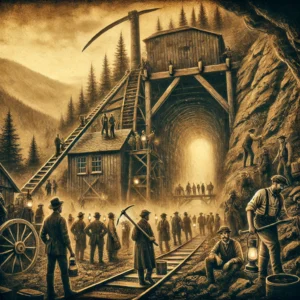
On May 5, 1910, a devastating explosion occurred at the Palos No. 3 Mine, located near Birmingham, Alabama. The blast claimed the lives of 83 men inside the mine and one man outside. The explosion was triggered by the ignition of methane gas in the 6th right entry, likely due to the use of open-flame lamps. Fine coal dust further intensified the blast, which caused immense damage to the underground equipment and collapsed multiple entries.
The Cause of the Explosion
The mine was notorious for methane gas accumulation, and despite continuous ventilation, the presence of gas in poorly ventilated areas became a serious hazard. The miners relied on pickaxes and permissible explosives to mine coal, but dynamite was used to break through tougher areas like the “middleman” and to brush the roof. However, the use of open-flame lamps by the miners greatly increased the risk of an explosion.
On that fateful day, the methane ignited and, combined with fine coal dust scattered throughout the mine, propagated the explosion through the entire mine and even blew flames 200 feet into the air. The impact of the explosion was felt for miles, collapsing sections of the mine and hurling timbers and rocks hundreds of feet away from the entrance.
Rescue and Aftermath
The rescue efforts were quickly organized, but the presence of firedamp and other hazards made the mission extremely dangerous. The first rescuers, who ventured into the mine, were overcome by the toxic gases and had to be evacuated. As the rescue work continued, more bodies were found, many of them severely burned or crushed. Some victims had attempted to protect themselves from suffocation by covering their faces with clothing, but the toxic gases proved fatal.
Efforts to recover the bodies were complicated by fires within the mine and heavy smoke, which delayed the process for several days. By the end of the recovery mission, 84 people were confirmed dead, many of whom were entombed deep within the mine. A special burial ground was designated for the victims, and the community rallied to support the families left behind, with the Red Cross providing relief.
Significance and Legislative Response
The Palos No. 3 Mine explosion shocked the nation and brought renewed attention to the dangers faced by coal miners. At the time of the disaster, a bill was already in discussion to establish the Bureau of Mines, an institution dedicated to improving mine safety and reducing the number of mining accidents. The Palos disaster provided further impetus for the passage of this legislation, leading to long-term changes in mine safety regulations.

The Palos No. 3 Mine explosion remains one of the deadliest mining disasters in Alabama’s history. It highlighted the dangers of methane gas, the need for proper ventilation, and the risks posed by outdated mining practices such as the use of open-flame lamps. While it is remembered as a tragedy, the lessons learned from this incident contributed to improvements in mining safety standards in the years that followed.