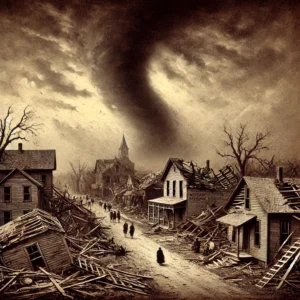
On the evening of June 12, 1899, the small town of New Richmond, Wisconsin, was forever changed when one of the deadliest tornadoes in U.S. history tore through its streets. The F5 tornado left a path of devastation that would not only flatten the town but also claim the lives of 117 people, leaving a lasting impact on the region and the history of severe weather in America.
The Calm Before the Storm
New Richmond, a town known for its bustling Main Street and close-knit community, was enjoying a day of excitement. A circus had come to town, attracting families from the surrounding areas. Children, parents, and workers crowded the streets, enjoying the rare spectacle.
But as the day wore on, a storm system began to form to the west. At 5:00 PM, the sky grew dark, and the storm intensified. The residents of New Richmond had little warning before one of the most powerful tornadoes ever recorded in the Midwest struck.
The Tornado Hits
The tornado that descended upon New Richmond was massive, with a width of over 500 yards. As it approached the town, the twister intensified, reaching the most violent classification—an F5 tornado on the Fujita scale, with winds estimated to have exceeded 260 miles per hour.
The tornado’s path was swift and destructive. As it reached the center of New Richmond, the powerful winds reduced homes, businesses, and public buildings to rubble in a matter of minutes. The downtown area, filled with people enjoying the circus, was hit hardest. Entire blocks were flattened, and many who had been in the streets or inside poorly built structures were unable to escape the tornado’s fury.
Destruction and Loss of Life
By the time the tornado passed, over 300 buildings had been destroyed. The town, once vibrant, was now a scene of ruin. Buildings, trees, and debris were strewn across the landscape, with few structures left standing.
The human toll was staggering. 117 people were killed, and approximately 125 were injured, many of them seriously. The tornado struck so quickly that many residents had no time to seek shelter.
One of the reasons for the high death toll was the sheer number of people in the town due to the circus. Many families had come to New Richmond for the event, and the crowded streets offered little protection from the storm. The destruction was total in many areas, and many homes and businesses were obliterated.
Aftermath and Recovery
In the immediate aftermath of the tornado, New Richmond was left in shock. The community quickly rallied to aid those affected, with neighbors digging through the rubble to find survivors and recover the bodies of those who had perished. The surrounding towns and cities responded with aid, offering food, clothing, and building materials to help the people of New Richmond rebuild their lives.
Despite the extensive damage, New Richmond began the long process of recovery. Slowly, the town was rebuilt, with homes, schools, and businesses rising from the rubble. However, the memory of that day would remain with the survivors forever. Many of those who had experienced the storm firsthand spoke of the terror and destruction, passing the story down through generations.
A Tornado of Historic Proportions
The 1899 New Richmond Tornado remains one of the deadliest tornadoes in U.S. history. Its intensity and the timing of its strike—during a busy day in the town—combined to make it one of the most destructive storms Wisconsin has ever seen.
The lessons learned from this disaster emphasized the need for better preparedness in areas prone to tornadoes. Though early warning systems were not in place at the time, the tragedy led to a greater understanding of the importance of storm forecasting and community preparedness.
Remembering the Tornado Today
Over a century later, the New Richmond tornado is still remembered as one of Wisconsin’s greatest tragedies. The town has since recovered and grown, but the legacy of that fateful day lives on. Memorials and remembrances are held to honor the lives lost and to ensure that future generations understand the power of nature and the resilience of those who survived it.

New Richmond’s history is now inextricably linked with the event, and it serves as a reminder of the devastating effects of severe weather. The tornado also highlights the critical need for disaster preparedness in vulnerable regions, a lesson still relevant today.