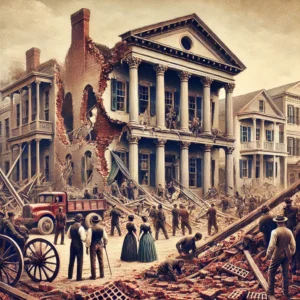
The 1886 Charleston earthquake stands as one of the most powerful and destructive seismic events in the history of the eastern United States. Striking on August 31, 1886, it profoundly impacted Charleston, South Carolina, and its surrounding areas, leaving a lasting legacy on the region’s architecture, emergency preparedness, and understanding of seismic activity.
A Day That Shook Charleston
At precisely 9:50 PM, the city of Charleston was rocked by a magnitude 7.0 earthquake, with estimates suggesting it could have reached as high as 7.3. The epicenter was located near Summerville, approximately 20 miles northwest of the city. The tremors lasted for about 30 seconds, causing widespread panic among residents.
Destruction and Devastation
The earthquake inflicted catastrophic damage on Charleston, a city known for its historical architecture. Most buildings sustained significant damage, and approximately 1,000 structures were either heavily damaged or completely destroyed. Iconic landmarks, including churches, homes, and public buildings, were left in ruins.
The destruction was not confined to the built environment; the natural landscape also suffered. Many trees were uprooted, and the ground itself cracked in various locations. The powerful seismic waves were felt as far away as Boston, Massachusetts, and even in Cuba.
Human Cost
The human toll of the earthquake was tragic. Estimates indicate that around 60 people lost their lives, with many more injured. The devastation left thousands homeless, forcing many families to seek shelter in makeshift camps and temporary housing. The community came together in the aftermath, providing assistance to those affected, but the scars of the disaster lingered.
Geophysical Context
The 1886 Charleston earthquake is a reminder of the seismic potential in the eastern United States. Unlike the frequent earthquakes experienced on the West Coast, the East has a complex tectonic setting. The earthquake was attributed to ancient fault lines that lie dormant, making the region susceptible to rare but powerful seismic events.
Numerous aftershocks followed the main quake, with some being strong enough to cause additional damage and further panic among residents. These aftershocks lasted for months, serving as a constant reminder of the initial catastrophe.
A Legacy of Preparedness
In the wake of the disaster, Charleston underwent significant changes in building codes and emergency preparedness. The devastation highlighted the need for better construction practices, leading to stricter regulations to ensure that buildings could withstand potential future earthquakes.
The 1886 earthquake also sparked interest in seismology and the study of earthquakes in the eastern United States. Researchers and scientists began to investigate the seismic history of the region, leading to a greater understanding of the risks and vulnerabilities.

The 1886 Charleston earthquake is more than just a historical event; it is a testament to the resilience of a community faced with adversity. It reshaped Charleston’s landscape and culture, fostering a spirit of cooperation and preparedness that endures to this day. As we continue to study seismic activity and improve our understanding of earthquakes, the lessons learned from this catastrophic event remain relevant, reminding us of the unpredictable power of nature.